Air-to-Ground Coordination: Timed to Arrival
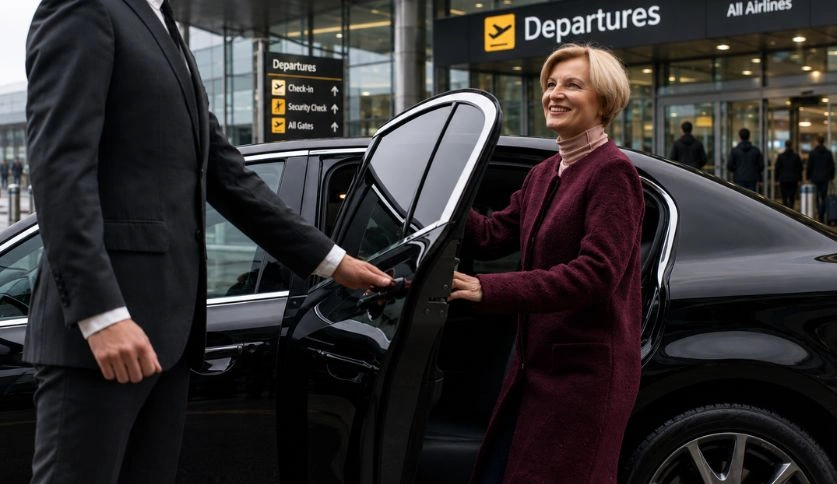

Air arrivals don’t always align with ground reality. Gates shift, clearance takes time, and runways compress timing. We position vehicles with awareness of terminals, FBO procedures, and access constraints, whether commercial or private, so the transition from air to ground happens without pause or added oversight.
What This
Service Supports
-
Commercial Airport Transfers
Gate assignments, baggage timing, and terminal traffic are monitored before arrival. Pickup locations are adjusted as conditions shift, reducing curbside friction and unnecessary waiting. Timing follows real conditions, not just the scheduled arrival.
-
FBO & Private Aviation Coordination
Tail numbers and fixed-base operator procedures are confirmed in advance. Vehicles are staged according to ramp access protocols and clearance windows, allowing direct, measured transitions from aircraft to vehicle.
-
Group & Multi-Arrival Logistics
When multiple passengers arrive on separate flights, ground movement is handled as a single sequence. Arrival windows are mapped, staging is coordinated, and departures are timed to avoid fragmentation or repeated communication.
How Airport
Coordination Operates
-
Flight Monitoring & Pre-Arrival Planning
Flights are tracked in real time. Delays, early arrivals, gate changes, and diversions are accounted for, with adjustments made before vehicles move.
-
Terminal & FBO Positioning
Vehicle placement reflects terminal layout, security zones, and airport flow. For private aviation, positioning aligns with ramp access rules and FBO coordination.
-
On-Standby & Turnaround Management
Chauffeurs remain ready without creating a visible presence or pressure. Departures are executed when clearance, baggage, and passengers are in place, not before.
Ground Support, Aligned Across Airports
Whether coordinating arrivals into Nashville, major financial hubs, or regional airfields, the approach remains steady. Communication stays measured, and timing expectations are clear. Airport procedures may differ. The approach does not.
What Stays Off Your Radar
Tracking airport movement minute by minute
Relaying updates between aviation staff and chauffeurs
Adjusting pickup strategy as terminal conditions shift
Managing curbside visibility and wait exposure

FAQs
Yes. We can communicate directly with flight operations, handling agents, or executive assistants to confirm arrival times, access procedures, and positioning requirements. Coordination remains centralized, so you don’t have to relay updates between teams.
Pickup timing is structured around actual exit flow, not just scheduled landing time. If baggage or customs processing is delayed, the vehicle remains positioned and ready without requiring any additional coordination from you.
Both options are available. Meet-and-greet service inside the terminal can be arranged when preferred, or curbside pickup can be structured to minimize visibility and wait time. The approach is determined in advance based on security, preference, and airport flow.